Managing Risk During Ceiling and Partition Installations
Managing risk during ceiling and partition installations is a critical consideration for any commercial building or data centre project. These works are often carried out at key stages of a fit out, frequently alongside multiple trades, live services, and tight programme deadlines. When risk is not properly planned or controlled, the consequences can include safety incidents, programme delays, compromised fire performance, and costly remedial works.
For commercial clients and data centre operators across Ireland and Europe, ceilings and partitions are not simply architectural finishes. They form part of the building’s life safety strategy, acoustic performance, service integration, and long term operational resilience. Poorly coordinated installations can introduce risks that are difficult to identify once the building is live.
This guide explains how professional ceiling and partition contractors manage risk throughout the installation process. It covers the most common hazards, how they are controlled, and why early planning, coordination, and specialist experience make a measurable difference on complex commercial and technical projects.
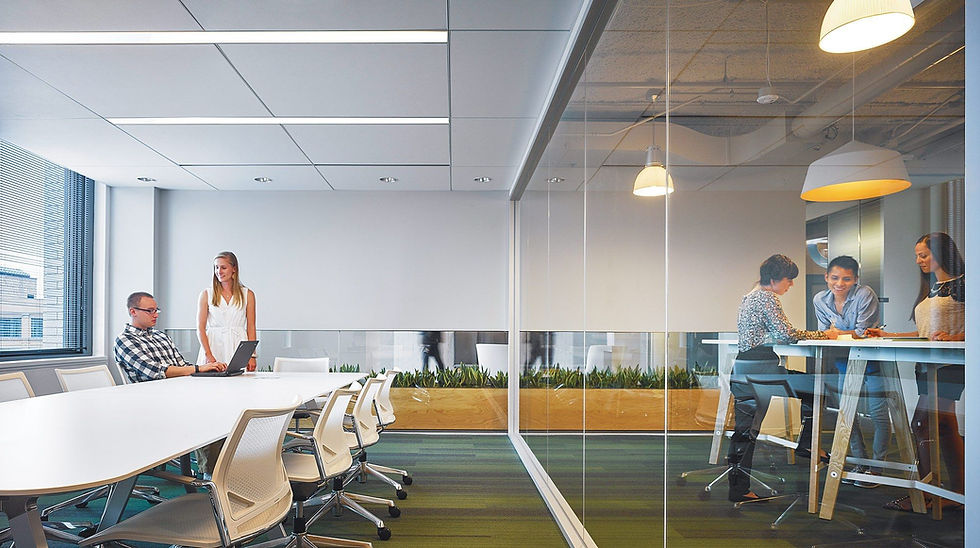
Why Risk Management Matters in Commercial Installations
Ceiling and partition installations sit at the intersection of structure, services, and fire strategy. Unlike surface finishes, these systems are installed overhead, interact with mechanical and electrical infrastructure, and often form part of the building’s fire and acoustic compartmentation.
In commercial office environments, unmanaged risk can result in unsafe working conditions, poor acoustic outcomes, and restricted access for future maintenance. In data centres, the implications are significantly greater. Ceilings and partitions may interface with containment systems, high level cable routes, and critical fire protection measures. Even small installation errors can have a disproportionate impact on operational continuity.
Many risks originate at design stage when decisions are made about ceiling and partition system selection. Choosing systems without fully understanding load requirements, fire performance, or access needs can introduce risks that are difficult to resolve once work is underway.
Effective risk management protects people first, but it also safeguards programme certainty, budget control, and long term asset value. Clients who prioritise this early benefit from smoother delivery and fewer surprises later.
Common Risks During Ceiling Installations
Working at Heightt
Ceiling installation inherently involves working at height. Risks include falls from ladders, mobile towers, or scaffolding, particularly where access equipment is incorrectly selected or poorly maintained.
Understanding how suspended ceiling systems are constructed is essential for managing this risk. Different ceiling types require different installation methods, access strategies, and sequencing.
Professional contractors mitigate height related risks through proper access planning, trained operatives, and clearly defined method statements. Selecting the right access solution for each task reduces reliance on unsafe practices and supports consistent productivity.
Manual Handling and Material Weight
Ceiling grids, tiles, and metal systems can be awkward to handle, particularly when installed above shoulder height or in confined spaces. Repetitive lifting without adequate controls increases the risk of strain injuries and fatigue.
Risk managed projects account for material weights, delivery sequencing, and realistic installation rates. Team lifting, mechanical aids, and thoughtful layout planning all reduce manual handling risk.
Falling Objects
Tools, fixings, and ceiling components can fall from height if work zones are not properly controlled. This risk is amplified on busy commercial sites where ceiling works overlap with other trades operating below.
Clear exclusion zones, disciplined housekeeping, and coordinated sequencing are essential controls. Clients benefit directly from these measures through reduced incidents and fewer work stoppages.
Common Risks During Partition Installations
Structural Stability and Fixings
Partitions must be correctly fixed to floors, soffits, and surrounding structure. Poor fixing or incorrect system choice can lead to instability, cracking, or long term performance issues.
Selecting suitable partition systems for commercial environments is a critical early decision, particularly where acoustic or fire performance is required. These risks are often underestimated during design stages.
Fire and Acoustic Performance Gaps
One of the most common hidden risks in partition installations is incomplete detailing at junctions, especially above ceilings or around service penetrations. Small gaps can significantly compromise both fire resistance and sound insulation.
This is why acoustic coordination between ceilings and partitions must be considered early and inspected thoroughly during installation. Once ceilings are closed, identifying and correcting these issues becomes far more difficult.
Material Storage and Site Congestion
Partition boards and framing systems take up significant space. Poor storage can introduce trip hazards, damage materials, and restrict access routes.
Well managed projects plan deliveries carefully, maintain clear circulation routes, and avoid overcrowding work areas.
Risks Associated with Services and Building Systems
Ceiling and partition installations frequently take place alongside mechanical, electrical, and data services. Risks include accidental contact with live wiring, clashes with ductwork, and damage to cabling or containment infrastructure.
Many of these issues stem from inadequate planning above the ceiling void. Applying best practice for routing cabling, HVAC, and lighting above suspended ceilings significantly reduces clashes and rework.
In data centre environments, where service density is high and tolerance for error is minimal, coordinated installation sequencing is essential to managing risk.
The Importance of Site Coordination and Sequencing
Most installation risks arise not from individual tasks, but from poor coordination between trades. Overlapping work zones, unclear sequencing, and misaligned programmes increase the likelihood of incidents and defects.
Clear communication, coordinated programmes, and regular site briefings allow ceiling and partition works to be carried out safely and efficiently. This also protects completed work from damage by following trades.
From a client perspective, effective coordination translates into improved programme certainty and reduced disruption.
Risk Assessment and Pre Installation Planning
Effective risk management begins long before installation starts. Site surveys, design reviews, and structured risk assessments allow hazards to be identified and mitigated early.
This is where understanding why specialist ceiling and partition contractors matter becomes critical. Experience allows common issues to be anticipated and designed out rather than addressed reactively.
Clear method statements, defined access strategies, and agreed quality benchmarks establish a strong foundation for safe installation.
Fire Safety and Compartmentation Risk
Ceilings and partitions often form part of a building’s fire compartmentation strategy. Poor installation or incomplete detailing can undermine this strategy without being immediately visible.
Selecting appropriate ceiling types for commercial buildings helps ensure that the system aligns with the overall fire strategy and regulatory requirements.
In data centres and multi storey commercial buildings, maintaining fire integrity is critical to protecting both people and infrastructure.
Environmental and Occupant Related Risks
Dust, noise, and vibration are unavoidable during ceiling and partition installations, but they must be carefully controlled, particularly in live environments.
Risk aware contractors use dust suppression, phased working, and clear communication to minimise disruption. This is especially important in occupied offices and phased data centre upgrades where business continuity must be maintained.
Long Term Risk After Installation
Risk continues beyond handover. Access to ceiling voids, future service changes, and maintenance activities can introduce new hazards if systems are not designed with flexibility in mind.
Ceilings and partitions that allow safe access and adaptation protect the building throughout its lifecycle and reduce long term operational risk.
What Commercial Clients Should Look For in Ceilings and Partitions installations
Clients can significantly reduce risk by engaging contractors with proven experience in similar environments. Evidence of structured planning, strong coordination practices, and robust quality control should be expected.
Understanding how ceiling and partition services are delivered in complex commercial environments helps clients make informed decisions early and avoid costly mistakes later.
Quick takeaways
Ceiling and partition installations involve safety, fire, and performance risks
Most risk arises from poor coordination rather than individual tasks
Early planning and experienced contractors reduce incidents and rework
Fire and acoustic performance must be protected at all interfaces
Quality control is essential before and after installation
Long term access and maintenance should be considered from the outset
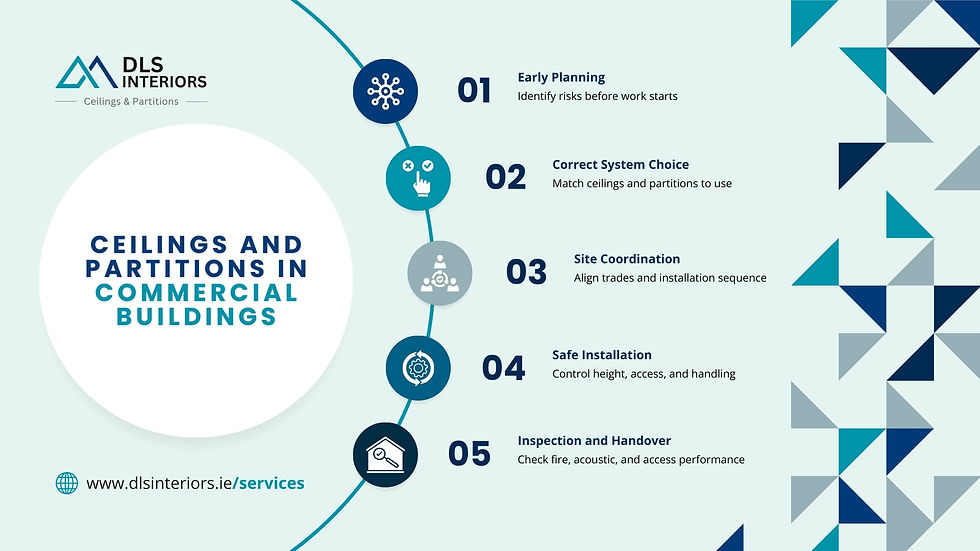
Conclusion
Managing risk during ceiling and partition installations is essential for the successful delivery of commercial buildings and data centres. These systems play a critical role in safety, performance, and long term operation, yet their risks are often underestimated.
For commercial clients across Ireland and Europe, working with specialist contractors ensures that risks are identified, controlled, and managed from the earliest stages of a project. From system selection and access planning to fire performance and quality control, a structured approach to risk management protects people, programmes, and investment.
FAQs
1. Why is risk management important during ceiling and partition installations?
Ceiling and partition works involve working at height, coordination with services, and fire performance requirements. Poor risk management can lead to safety incidents, delays, and long term compliance issues.
2. What are the most common risks during ceiling installations?
The most common risks include working at height, manual handling of materials, falling objects, and clashes with mechanical and electrical services above the ceiling.
3. How do partition installations create fire and acoustic risks?
Risks often arise at junctions, service penetrations, and above ceiling level. Incomplete detailing can compromise fire resistance and acoustic performance if not correctly installed and inspected.
4. Why do data centre projects require additional risk controls?
Data centres have higher service density, critical infrastructure, and strict fire and operational requirements. Even minor installation errors can impact performance or uptime, making careful planning essential.
5. How can commercial clients reduce risk on ceiling and partition projects?
By engaging experienced ceiling and partition contractors early, ensuring proper coordination between trades, and prioritising inspection and quality control throughout the installation process.


