What Makes a Data Centre Ceiling System Suitable?
A data centre ceiling system needs to support far more than appearance. In modern technical facilities, ceiling systems can influence service access, airflow management, M&E coordination, fire strategy, maintenance efficiency, containment integration, and long-term operational flexibility.
Across Ireland and Europe, project teams are increasingly recognising that data centre ceiling systems Ireland require a different approach from standard commercial ceilings. Unlike typical office environments, data centres contain dense mechanical and electrical infrastructure, specialist cooling systems, critical cabling routes, containment layouts, and strict maintenance requirements. This means ceiling specification should be considered early in the project lifecycle rather than treated as a final interior finish.
For commercial clients, consultants, and technical facility teams, choosing the right ceiling system can help support better coordination between trades, improved access to critical services, and smoother long-term maintenance planning.
DLS Interiors supports commercial and technical projects through specialist commercial ceiling systems, coordinated installation, and technical facility fit-outs across Ireland and Europe.
This guide explains what makes a ceiling system suitable for a data centre, how different ceiling systems compare, why M&E coordination matters, and what project teams should consider before specifying or installing a ceiling system in a technical facility environment.

Why Data Centre Ceiling Systems Are Different
Data centres place unique demands on ceiling systems. Unlike standard commercial buildings, technical facilities depend on uninterrupted operation, service accessibility, environmental control, and coordinated infrastructure management.
In a traditional office, a ceiling may primarily support lighting, acoustic control, and aesthetics. In a data centre, however, the ceiling zone often becomes part of the wider technical infrastructure. It may need to accommodate high-density cable routes, specialist containment systems, cooling infrastructure, lighting coordination, access panels, and future service expansion.
This is why many project teams involve specialist ceiling and partition contractors in Ireland earlier in the planning stage.
Data centre projects also require long-term operational thinking. Ceiling systems that are difficult to access or poorly coordinated can create maintenance challenges later. Access routes, sequencing, and future upgrades all need to be considered from the outset.
For technical environments, the ceiling is not simply an interior finish. It becomes part of the operational framework that supports uptime, maintenance, and adaptability.
What a Data Centre Ceiling System Needs to Support
A properly designed data centre ceiling system should support multiple technical and operational requirements simultaneously.
Mechanical systems may include cooling infrastructure, ventilation components, containment systems, and service routes above the ceiling. Electrical infrastructure often includes lighting, cable containment, power distribution, monitoring systems, and emergency systems that all require careful coordination with the ceiling layout.
Service access is another critical consideration. Technical facilities require regular inspections and maintenance, so ceiling systems should allow safe and practical access to infrastructure above the ceiling void.
Future flexibility is equally important. Data centres evolve continuously, and ceiling systems should support future service modifications, changing layouts, and infrastructure upgrades without creating unnecessary disruption.
Containment strategies, including Hot Aisle Containment Systems, may also need to integrate with ceilings, partitions, and service layouts. This coordinated approach can help support airflow separation and organised technical environments.
Project teams should also consider fire strategy, acoustic control, maintenance access, and long-term durability during specification.
Key Factors That Make a Ceiling System Suitable for a Data Centre
Several factors influence whether a ceiling system is suitable for a technical facility or data centre environment.
Service access is one of the most important considerations. Maintenance teams need practical access to lighting, cable trays, ventilation systems, and infrastructure above the ceiling. Ceiling systems that restrict access may create operational challenges later.
M&E coordination is equally critical. Ceiling systems interact directly with cooling systems, ventilation, electrical services, lighting, containment layouts, and fire detection systems. Early coordination between trades helps reduce service clashes and programme delays.
Airflow management should also be considered during specification. Ceiling layouts can influence cooling strategies, containment integration, and maintenance pathways. In some projects, containment systems may need to coordinate directly with ceiling grids and partition layouts.
Structural support requirements vary depending on the project. Specialist systems such as Unistrut structural systems may support coordinated service infrastructure and technical layouts in high-service environments.
Future flexibility is another key consideration. Data centres rarely remain static, so ceiling systems should support future upgrades and service modifications where possible.
Project teams should also assess fire performance, acoustic requirements, clean installation standards, and durability as part of the wider technical design strategy.
Suspended Ceiling Systems in Data Centres
Not every data centre uses the same ceiling system. The correct specification depends on the technical design, maintenance strategy, cooling requirements, and service coordination needs of the facility.
In some technical environments, suspended ceiling systems can support service access, coordinated layouts, and adaptable maintenance zones.
Lay-In Grid Ceilings for Service Access
Lay-in grid ceilings are commonly used where easy access to services is required. Ceiling tiles can be removed individually, allowing maintenance teams to access lighting, cabling, and infrastructure above the ceiling without major disruption.
This type of system may be particularly useful in service corridors, control rooms, technical support spaces, and ancillary data centre environments.
Projects requiring long-term access to services often benefit from the flexibility associated with grid ceiling layouts. DLS Interiors has also explored this topic further in its blog on What are Grid Ceilings.

MF Ceiling Systems for Robust Finishes
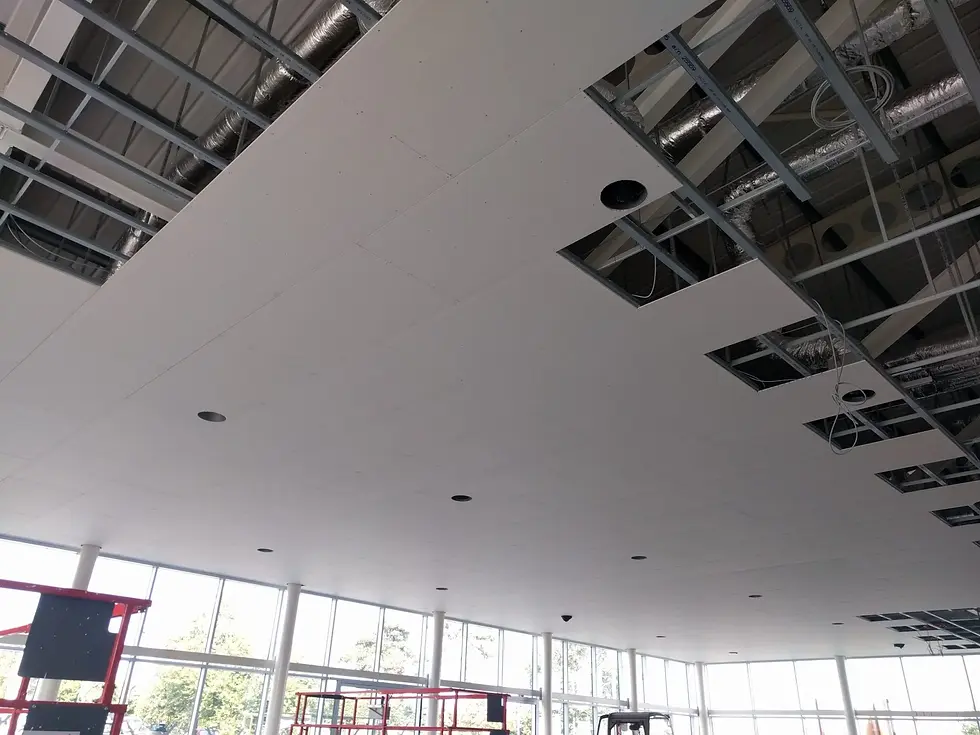
MF ceiling systems use concealed metal framing with plasterboard finishes. They may be specified where a more seamless appearance or specific acoustic or fire performance considerations apply.
Project teams should consider maintenance access, future service changes, lighting integration, and ventilation coordination when specifying MF ceilings within technical facilities.
MF systems may suit reception areas, office spaces attached to data centres, and support environments where appearance and controlled finishes matter.
Unistrut Ceiling Support Systems
Unistrut systems can support coordinated service infrastructure within technical environments. These systems may assist with organised cable management, service coordination, and overhead infrastructure layouts.
As with all technical specifications, structural and load considerations should be reviewed by the relevant project engineers and consultants.

Tate Grid and Gordon Grid Systems
Specialist systems such as Tate Grid and Gordon Grid are often associated with technical environments where service density and accessibility are priorities.
These systems may support organised infrastructure layouts, service accessibility, and maintenance planning in high-service technical spaces.

SAS Ceiling Systems for Technical Buildings
SAS ceiling systems are commonly specified in commercial and technical environments where durability, coordinated finishes, and maintenance access are important.
Depending on the project specification, SAS systems may support acoustic control, clean finishes, and service integration within technical facilities.

Why M&E Coordination Is Critical in Data Centre Ceiling Installation
M&E coordination is one of the most important elements of successful data centre ceiling installation.
Ceiling systems interact directly with lighting, cooling systems, cable routes, fire detection, ventilation, and containment systems. Without proper coordination, projects may experience service clashes, delays, restricted access, or costly rework.
Successful technical projects rely on communication between ceiling contractors, mechanical contractors, electrical contractors, architects, consultants, and main contractors from the earliest stages of the programme.
In data centre projects, service access and programme reliability should always be considered alongside appearance and finish quality.
DLS Interiors regularly coordinates ceiling installation with wider commercial and technical infrastructure requirements across Ireland and Europe through its commercial interior projects.
Ceiling Systems and Data Centre Airflow
Cooling performance is central to data centre operation. Ceiling layouts can influence airflow strategies, maintenance access, and containment integration.
While every facility is different, ceiling systems may need to support cooling infrastructure, airflow separation strategies, and access around containment zones.
In some environments, Hot Aisle Containment Systems can help support separation between hot and cool airflow pathways. However, airflow management should always be designed around the wider cooling strategy developed by the project’s engineering and technical teams.
Ceiling layouts should support maintenance access and coordinated service routes without interfering with cooling pathways or containment systems.
Maintenance Access and Future Adaptability
One of the most important aspects of a data centre ceiling system is long-term adaptability.
Technical facilities evolve continuously. Equipment changes, cabling expands, cooling systems are upgraded, and layouts may need modification over time.
A ceiling system that restricts access may create operational disruption later. This is why many project teams prioritise removable ceiling zones, coordinated service layouts, maintenance routes, and adaptable infrastructure planning during specification.
Projects involving high-density technical infrastructure should consider how maintenance teams will access services years after installation — not only during the initial fit-out phase.
Common Mistakes When Specifying Data Centre Ceiling Systems
One of the most common mistakes is treating the ceiling as a standard commercial finish rather than part of the wider technical infrastructure.
Another frequent issue is involving M&E teams too late in the programme. Ceiling systems interact directly with mechanical and electrical services, so early coordination is essential.
Poor service access planning can also create long-term maintenance problems. Ceiling systems should support inspections, future upgrades, and access to infrastructure without excessive disruption.
Some projects underestimate the importance of containment integration, future flexibility, or sequencing with other trades. Choosing a ceiling system based on cost alone can also lead to operational challenges later.
Technical facility projects benefit from coordinated planning, specialist installation experience, and realistic long-term operational thinking.
How DLS Interiors Supports Data Centre Ceiling Projects
DLS Interiors supports technical facility and commercial projects across Ireland and Europe through coordinated ceiling and partition installation services.
Capabilities include:
Suspended ceilings
Lay-in grid ceilings
MF ceiling systems
Unistrut structural systems
Tate Grid
Gordon Grid
SAS ceiling systems
Whitewall partitions
Fire-rated partitions
Technical facility coordination
M&E integration support
Hot Aisle Containment Systems
As a specialist commercial ceiling contractor in Ireland, DLS Interiors works alongside project teams to support coordinated installation, service integration, and programme delivery across technical and commercial environments.
Project teams looking for coordinated technical facility support can also speak to DLS Interiors about specification requirements, containment integration, and ceiling installation planning.
Quick takeaways
Service access is essential for maintenance and upgrades
Ceiling systems must coordinate with M&E infrastructure
Airflow and containment integration should be considered early
Flexible ceiling layouts support future adaptability
Grid ceilings are commonly used for accessible service zones
Early contractor coordination helps reduce project delays
Technical facilities require more than standard commercial ceilings

Conclusion
Choosing the right data centre ceiling system involves far more than selecting a standard suspended ceiling. Technical facilities require ceiling systems that support service access, airflow management, M&E coordination, containment integration, and future adaptability.
Successful projects depend on early planning, coordinated installation, and long-term operational thinking. Ceiling systems should work alongside cooling infrastructure, electrical services, maintenance strategies, and containment layouts to support reliable facility performance over time.
Whether specifying lay-in grid ceilings, MF systems, SAS ceilings, or specialist support structures, project teams should prioritise accessibility, coordination, and flexibility from the outset.
DLS Interiors supports commercial and technical facility projects across Ireland and Europe through specialist ceiling installation, partition systems, and coordinated technical fit-out services tailored to complex environments.
FAQs
1. What type of ceiling is best for a data centre?
The best ceiling system for a data centre depends on the facility’s technical requirements, cooling strategy, and maintenance needs. Lay-in grid ceilings are commonly used where regular service access is required, while MF ceilings may suit office or support areas attached to technical facilities.
2. Why is service access important in data centre ceiling systems?
Service access is critical because maintenance teams need safe and practical access to cabling, lighting, cooling systems, and electrical infrastructure above the ceiling. Poor access can increase downtime and make future upgrades more difficult.
3. Do ceiling systems affect airflow in data centres?
Yes, ceiling layouts can influence airflow management and containment integration. Ceiling systems may need to coordinate with cooling infrastructure and hot aisle containment strategies to support efficient airflow separation within the facility.
4. What is M&E coordination in ceiling installation?
M&E coordination refers to the planning and integration of mechanical and electrical services with the ceiling system. Proper coordination helps reduce service clashes, installation delays, and future maintenance issues during technical facility projects.
5. Can data centre ceiling systems be adapted in the future?
Most modern data centre ceiling systems are designed with future adaptability in mind. Flexible layouts, removable ceiling zones, and coordinated service routes can help support future upgrades, equipment changes, and infrastructure expansion.


