Ceiling Contractor Ireland: What to Know Before Hiring
A ceiling contractor is a specialist who installs, repairs, replaces and upgrades ceiling systems in homes, offices, schools, shops, healthcare buildings and commercial properties. In Ireland, the right ceiling contractor can help improve how a building looks, sounds and functions while also supporting access to lighting, ventilation, cabling and other services above the ceiling.
Choosing the right contractor matters because ceiling work is rarely just cosmetic. A poorly specified ceiling can affect acoustics, fire performance, maintenance access, energy efficiency and long term durability. For commercial clients in Dublin, Cork, Galway, Limerick, Waterford and across Ireland, a professional ceiling contractor should understand the building use, the required ceiling system and how the work will be delivered with minimum disruption.
This guide explains what a ceiling contractor does, when to hire one, what services are available, how costs are usually assessed and how to choose the right specialist for your project.
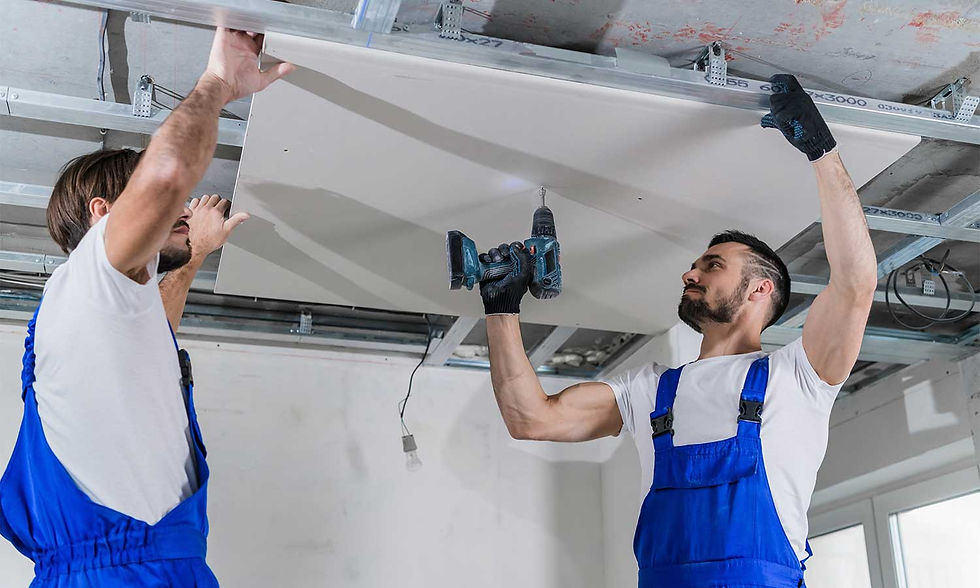
What Does a Ceiling Contractor Do?
A ceiling contractor installs and maintains ceiling systems for residential, commercial and public buildings. Their work can include suspended ceilings, acoustic ceilings, plasterboard ceilings, ceiling repairs, ceiling replacement and commercial ceiling packages.
In a commercial setting, ceiling contractors do much more than fit tiles or boards. They help coordinate the ceiling with lighting, HVAC systems, sprinklers, cabling, access panels and partitions. This is especially important in offices, schools, healthcare buildings, retail spaces and hospitality premises where ceilings affect day to day comfort and maintenance.
A suspended ceiling contractor in Ireland may install grid ceilings with removable tiles, allowing easy access to services above. An acoustic ceiling contractor may focus on reducing echo and improving speech clarity in open plan offices, classrooms or meeting rooms. A plasterboard ceiling contractor may be needed where a smooth, seamless finish is preferred.
For commercial ceiling work, the contractor should understand sequencing, site access, material handling, health and safety requirements, and coordination with electricians, HVAC contractors, architects, builders and facilities teams. This practical coordination is often what separates a basic installer from a reliable commercial ceiling contractor.
When Should You Hire a Ceiling Contractor?
You should hire a ceiling contractor when a ceiling needs specialist installation, repair, replacement or performance improvement. This applies to both new projects and existing buildings.
Common reasons to hire a ceiling contractor include office refurbishments, school upgrades, retail renovations, healthcare building improvements, water damaged ceiling repairs, acoustic improvements, fire rated ceiling requirements, and replacement of old or damaged suspended ceiling tiles.
In commercial properties, ceiling work is often required when layouts change or services need to be upgraded. For example, an office may need a new suspended ceiling to improve access to cabling and ventilation. A school may need acoustic ceiling panels to reduce classroom noise. A retail unit may need a modern ceiling system to improve lighting and visual appeal. A healthcare or hospitality premises may require moisture resistant or hygienic ceiling finishes in certain areas.
Homeowners may also hire a ceiling contractor for plasterboard ceiling repairs, ceiling replacement after leaks, cracks, sagging, or general renovation work.
The best time to involve a ceiling contractor is early in the planning stage. Early advice helps avoid clashes with lighting, ventilation, fire detection, partitions and other trades.
Main Ceiling Contractor Services in Ireland
Suspended Ceiling Installation
Suspended ceiling installation is one of the most common services offered by ceiling contractors in Ireland. A suspended ceiling is installed below the structural ceiling using a metal grid and ceiling tiles.
Suspended ceilings are popular because they provide a clean finish while allowing access to services above. They are widely used in offices, schools, shops, healthcare buildings and commercial properties. For facilities managers and business owners, this access is a major advantage because tiles can be lifted for maintenance without major disruption.
Suspended ceilings Ireland wide are often chosen for their flexibility, acoustic options and practical maintenance benefits.
Acoustic Ceilings
Acoustic ceilings are designed to control sound within a space. They help reduce reverberation, improve speech clarity and create more comfortable environments.
An acoustic ceiling contractor may recommend specialist ceiling tiles, baffles, rafts or acoustic plasterboard systems depending on the space. These systems are especially useful in open plan offices, classrooms, meeting rooms, reception areas and healthcare settings.
For schools and commercial clients, acoustic performance is not just about comfort. It can affect concentration, privacy and communication.
Plasterboard Ceilings
Plasterboard ceilings are used where a smooth, seamless finish is required. They are common in offices, homes, reception areas, corridors and commercial interiors.
A plasterboard ceiling contractor can install new ceilings, repair damaged areas, improve fire or acoustic performance where specified, and coordinate openings for lighting or ventilation.
Plasterboard ceilings are often chosen for appearance, but they generally offer less direct access to services than suspended ceiling systems.
Commercial Ceiling Fit Outs
Commercial ceiling contractors work on offices, shops, schools, healthcare buildings, hospitality spaces, public buildings and industrial premises. The work may include suspended grid systems, acoustic ceilings, plasterboard ceilings, fire rated ceilings, moisture resistant ceilings and ceiling replacement.
In commercial projects, scheduling matters. Work may need to be phased, completed outside normal working hours or coordinated around live building operations. A good contractor should discuss access, disruption, programme, materials and handover clearly before work begins.
Ceiling Repairs and Replacement
Ceiling repairs may be needed due to water damage, cracking, sagging, damaged tiles, staining, mould, poor previous installation or general wear.
Ceiling replacement may be more suitable where the existing system is outdated, unsafe, difficult to maintain or no longer suitable for the building’s use. A professional ceiling contractor should inspect the area before recommending repair or replacement.
Fire Rated and Moisture Resistant Ceiling Systems
In some buildings, ceiling systems may need specific fire rated or moisture resistant properties. These requirements depend on the building type, room use and project specification.
Fire rated ceiling systems should be treated carefully because performance depends on the complete system, not just one product. Moisture resistant ceilings may be suitable for washrooms, kitchens, healthcare areas or other high humidity spaces.
Where performance requirements apply, always request clear product information and a written specification.
How to Choose the Best Ceiling Contractor in Ireland
Choosing the right ceiling contractor in Ireland should involve more than comparing the lowest quote. Ceiling work affects the look, function and long term maintenance of your building.
Start by checking relevant project experience. A contractor who regularly works on commercial ceiling systems will usually understand scheduling, access, coordination and service integration better than a general tradesperson.
Ask for a clear written quotation. It should explain the scope of work, materials, system type, access requirements, exclusions and expected programme. Vague quotations can lead to misunderstandings later.
Material quality also matters. The contractor should be able to explain why a particular ceiling system, tile or board is suitable for your space. For example, offices may need acoustic tiles, healthcare areas may need hygienic finishes, and technical spaces may need stronger access or support arrangements.
Local Irish experience is useful because building types, supplier availability, project logistics and site conditions vary across Dublin, Cork, Galway, Limerick, Waterford and nationwide commercial locations.
Good communication is another key factor. A professional ceiling contractor should explain what will happen, when it will happen and how disruption will be managed.
Previous project examples are valuable. They show the contractor’s ability to deliver similar work. For commercial projects, ask whether they have experience with offices, schools, retail spaces, healthcare facilities or occupied buildings.
Safety awareness is essential. Ceiling work can involve working at height, manual handling, dust control, electrical coordination and live building environments.
Finally, ask about aftercare or maintenance support. A ceiling system should remain practical long after installation is complete.
Suspended Ceiling vs Plasterboard Ceiling
A suspended ceiling and a plasterboard ceiling serve different purposes. The right choice depends on the building, the finish required and how often access is needed above the ceiling.
A suspended ceiling uses a metal grid and tiles. It is ideal where easy access is needed for lighting, cabling, HVAC, fire systems or future maintenance. This makes it a strong choice for offices, schools, retail units and commercial buildings.
A plasterboard ceiling provides a smooth, fixed finish. It is often chosen where appearance is the main priority or where a more permanent ceiling finish is required. It can look clean and refined, but service access is usually more limited unless access panels are included.
For commercial clients, the decision often comes down to practicality. If your building needs regular access above the ceiling, a suspended ceiling may be the better option. If the space needs a seamless finish and services are unlikely to change, plasterboard may be more suitable.
In many projects, both systems are used in different areas of the same building. For example, an office may use suspended ceilings in work areas and plasterboard ceilings in reception spaces or corridors.
Ceiling Contractors for Commercial Projects
Commercial ceiling contractors work across a wide range of sectors, including offices, shops, schools, healthcare buildings, hospitality venues and industrial properties.
In offices, ceilings need to support acoustic comfort, lighting layout, air movement and service access. In retail environments, ceilings often need to support visual presentation, lighting and durability. In schools, acoustics and safety are especially important. In healthcare buildings, hygiene, durability and access to services may influence the specification.
Commercial projects also require careful planning around disruption. If a building is occupied, work may need to be phased or completed outside normal hours. In shops, schools and offices, keeping the building operational can be as important as the ceiling installation itself.
A commercial ceiling contractor should be able to coordinate with other trades and understand the wider programme. Ceiling work often depends on electrical, mechanical and partition works being completed in the correct order.
For property managers and facilities teams, choosing the right ceiling contractor can reduce disruption, avoid rework and improve long term building performance.
How Much Does a Ceiling Contractor Cost in Ireland?
The cost of hiring a ceiling contractor in Ireland depends on the type of ceiling, the size of the area and the complexity of the project. Exact pricing should always be based on a site survey and written quotation.
The main factors that affect cost include ceiling area, ceiling system type, material choice, acoustic or fire rated requirements, access conditions, removal of the old ceiling, lighting and ventilation coordination, project location and whether the work is commercial or residential.
A simple ceiling tile replacement will usually be less complex than a full suspended ceiling installation with new grid, lighting coordination and acoustic performance requirements. A plasterboard ceiling repair will differ from a complete plasterboard ceiling installation. Fire rated or moisture resistant ceiling systems may require more specific materials and detailing.
Access also affects cost. Work in occupied buildings, tight spaces, high ceilings or live commercial environments may require additional planning and equipment.
Location can influence logistics too. Dublin city centre projects may have access and delivery constraints, while nationwide commercial projects may involve travel, staging and coordination across multiple sites.
The safest approach is to request a ceiling survey and written quotation. This gives the contractor a chance to inspect the space, understand your requirements and recommend the right system.
Local Irish Considerations
Hiring a ceiling contractor with Irish project experience can make the process smoother. Buildings across Ireland vary widely, from older properties and retail units to modern offices, schools, healthcare spaces and large commercial premises.
Local experience helps with understanding supplier availability, lead times, building access, property layouts and how to manage work in occupied premises. In cities such as Dublin, Cork, Galway, Limerick and Waterford, access, parking, delivery windows and building management rules can all affect how ceiling work is planned.
For nationwide commercial clients, consistency is also important. A contractor working across multiple locations should understand how to standardise ceiling systems while adapting to each site.
Irish weather and building conditions can also affect ceiling repairs, particularly where water ingress, moisture or older building fabric are involved. A contractor should assess the source of damage before simply replacing a ceiling finish.
The key point is that local knowledge supports better planning, clearer communication and more realistic project delivery.

Signs You Need Ceiling Repair or Replacement
There are several signs that a ceiling may need professional attention.
Water staining is one of the most common. It may indicate a leak above the ceiling or previous water damage. Before repairing the ceiling, the source of moisture should be identified.
Sagging is another warning sign. It can suggest failed fixings, moisture damage, poor installation or material deterioration.
Cracking may occur in plasterboard ceilings due to movement, age or impact. Small cracks may be repairable, but wider or recurring cracks should be inspected.
Damaged ceiling tiles can make a commercial space look poorly maintained and may affect acoustic or fire performance depending on the system.
Mould or moisture issues should never be ignored. They may indicate ventilation problems, leaks or unsuitable materials.
Poor acoustics can also signal that the ceiling system is not suitable for the space. Open plan offices, classrooms and meeting rooms often need acoustic ceiling treatment.
Outdated appearance is another valid reason for replacement, especially in client facing commercial environments.
Loose, unsafe or unstable ceiling sections should be inspected immediately.
Benefits of Hiring a Professional Ceiling Contractor
A professional ceiling contractor provides more than labour. They bring technical understanding, practical planning and installation experience.
The benefits include a better finish, improved acoustics, easier access to services, safer installation, greater durability and reduced disruption.
For commercial clients, professional installation can also improve how the building operates. A well planned suspended ceiling allows easier maintenance. A properly specified acoustic ceiling improves comfort. A carefully installed plasterboard ceiling enhances appearance. A correctly detailed fire rated ceiling supports the wider fire strategy.
Professional contractors also help coordinate with other trades. This reduces the risk of clashes between ceilings, lighting, HVAC, fire systems and partitions.
Long term, the right ceiling contractor can reduce maintenance issues and help the building remain adaptable as needs change.
Quick takeaways
A ceiling contractor installs, repairs and upgrades ceiling systems such as suspended ceilings, acoustic ceilings and plasterboard ceilings.
The right ceiling contractor helps improve access, acoustics, fire performance, appearance and long term building functionality.
Suspended ceilings are ideal for commercial spaces because they allow easy access to lighting, ventilation, cabling and other services.
Acoustic ceilings help reduce noise, improve speech clarity and create more comfortable offices, schools and commercial environments.
Ceiling costs in Ireland depend on the system type, project size, materials, access, location and any acoustic or fire rated requirements.
Choosing a contractor should involve checking experience, clear quotations, previous projects, communication and coordination with other trades.
A site survey and written quotation are the best starting points before any ceiling installation, repair or replacement work.

Conclusion
If you are planning ceiling installation, repair or replacement in Ireland, the best first step is a professional assessment of your space.
A site survey and written quotation will help identify the most suitable system, likely project requirements and any coordination issues before work begins.
To discuss suspended ceilings, acoustic ceilings, plasterboard ceilings or commercial ceiling work, contact a specialist ceiling contractor and request a consultation or quotation.
FAQs
1. What is a ceiling contractor?
A ceiling contractor is a specialist who installs, repairs and replaces ceiling systems such as suspended ceilings, acoustic ceilings, plasterboard ceilings and commercial ceiling systems.
2. When should you hire a ceiling contractor?
You should hire a ceiling contractor when installing a new ceiling, repairing damage, improving acoustics, replacing old ceiling tiles or upgrading a commercial ceiling system.
3. What does a suspended ceiling contractor do?
A suspended ceiling contractor installs grid and tile ceiling systems that conceal services while allowing access to lighting, ventilation, cabling and other building systems.
4. How do you choose a ceiling contractor in Ireland?
Choose a ceiling contractor in Ireland by checking relevant experience, written quotations, project examples, material knowledge, communication and ability to coordinate with other trades.
5. What ceiling system is best for offices?
Suspended ceilings are often best for offices because they provide service access, acoustic control, flexible tile replacement and a clean professional appearance.


